
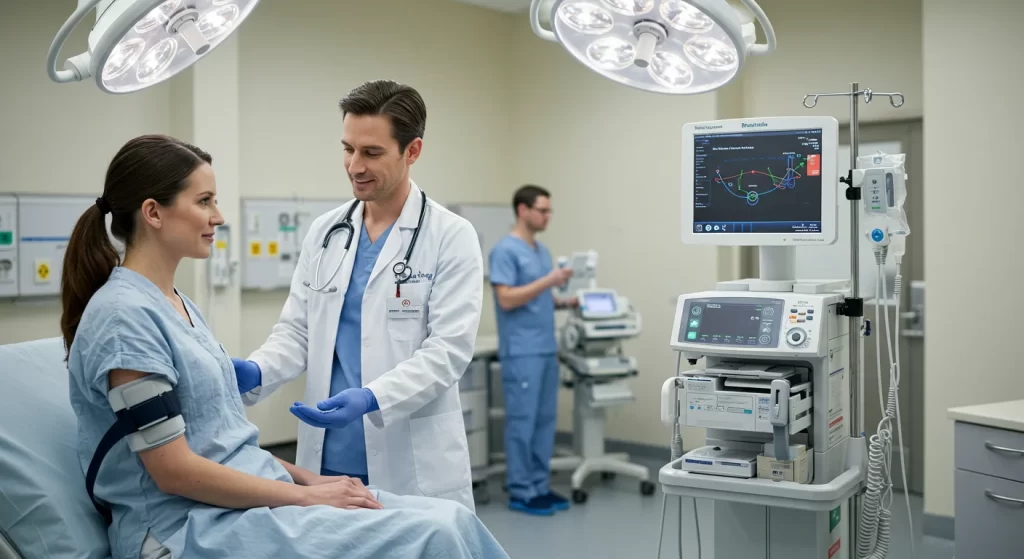

Modern hospitals depend on speed, accuracy, and real-time data to deliver high-quality patient care. As diagnostic testing becomes a central part of medical decision-making, hospitals need laboratory workflows that are fully connected to their digital systems.
Many healthcare facilities still rely on manual result entry, disconnected laboratory devices, and fragmented communication between the lab and clinical departments. This often leads to delays, human errors, repeated tests, and slower treatment decisions.
This is why lab device integration with hospital system has become a strategic priority for hospitals seeking better efficiency and stronger patient outcomes.
When laboratory analyzers and diagnostic equipment are connected directly to hospital systems, results move automatically between departments. Doctors receive faster access to test results, lab teams work more efficiently, and hospital management gains better operational visibility.
In this article, we explain how lab device integration works, why hospitals need it, the key benefits, common devices that can be connected, and how NitcoTek helps healthcare organizations build smarter integrated environments.
Lab device integration with hospital system means connecting laboratory analyzers, diagnostic machines, and testing equipment directly with the hospital’s digital software environment.
Instead of manually entering results into hospital records, data moves automatically from the lab device into systems such as the following:
This creates faster, more accurate, and more efficient workflows.
Many hospital laboratories use different equipment across multiple departments. Common devices that can be connected include:
A connected environment allows the following:
This makes lab device integration with hospital system a critical part of digital healthcare transformation.
In many clinical situations, timing matters. Doctors need quick access to lab data to make treatment decisions.
With integrated systems:
This improves both workflow speed and patient care quality.
Manual typing of results increases the risk of:
Automated lab device integration with hospital system reduces these risks significantly.
Hospitals depend on smooth communication between the following:
Integrated systems ensure everyone works from the same updated information.
As hospitals grow, laboratories handle more tests daily. Manual workflows become difficult to scale.
Connected systems help hospitals process higher volumes while maintaining quality and efficiency.
Doctors rely on accurate, immediate lab data. Faster access to results supports better treatment decisions and shorter patient waiting times.
Used for complete blood count tests and blood analysis. Integration helps transfer results directly into patient records.
Used for glucose, kidney function, liver tests, and more. Automatic result flow speeds diagnosis.
Used for hormone, antibody, and specialized testing. Integrated systems reduce manual transcription.
Used for cultures, bacterial testing, and sensitivity reports. Integration supports accurate tracking and reporting.
Used in routine screening and diagnostics. Automatic transfer improves efficiency.
Important for clotting tests and surgical preparation. Real-time results improve clinical readiness.
Widely used for advanced diagnostics. Integration ensures quick result visibility.
Devices used in emergency rooms, ICU, and bedside testing can also be connected for faster documentation.
Doctors request tests inside the hospital system. Orders move directly to the laboratory queue.
Lab staff process samples using connected devices.
Once testing is complete, results are sent directly into the hospital system without manual entry.
Supervisors can review and approve results before final release when required.
Doctors can view approved results inside patient records immediately.
Management can monitor:
This is why lab device integration with hospital system delivers both clinical and operational value.
Automated movement of orders and results reduces unnecessary delays.
Eliminating manual data entry lowers mistakes and improves data reliability.
Accurate results linked to the correct patient help reduce treatment risks.
Doctors receive timely information for urgent decisions.
Lab teams spend less time on repetitive admin work and more time on quality tasks.
Digital systems provide traceable records of orders, results, approvals, and timestamps.
Integrated operations help hospitals reduce bottlenecks and improve service delivery.
Hospital information systems manage hospital-wide operations. Integration connects lab workflows with registration, billing, and patient movement.
Laboratory Information Systems focus on lab operations such as
Lab device integration with hospital systems often includes LIS as the operational core.
Electronic Medical Records allow doctors to view results directly inside patient charts. This improves continuity of care.
Hospitals without connected lab systems often face the following:
Typing results manually slows operations.
Mistyped values can create clinical risk.
Missing visibility may lead to repeated unnecessary tests.
Doctors waiting for results lose valuable treatment time.
Lab data stored outside the main hospital system creates incomplete records.
These problems highlight the value of lab device integration with hospital system.
Hospitals often use equipment from multiple manufacturers. The solution should support broad compatibility.
Standard healthcare communication protocols help systems exchange data reliably.
Patient information must move safely using secure methods.
Results should appear quickly without delays.
The system should support additional devices, departments, and future growth.
Administrators should monitor connection health and operational metrics.
Hospitals need responsive support to minimize downtime.
NitcoTek specializes in healthcare software and integrated digital solutions designed for hospitals, clinics, and medical centres.
NitcoTek helps healthcare organizations connect laboratory devices with broader hospital platforms to improve data flow and operational efficiency.
NitcoTek solutions are designed to support growth while maintaining strong data handling standards.
Hospitals often use different brands and models of lab equipment. NitcoTek works to create practical integration strategies that fit existing environments.
Implementation is only the beginning. NitcoTek supports healthcare providers with onboarding, technical guidance, and continuous optimization.
As hospitals continue digital transformation, NitcoTek helps build connected environments that support long-term efficiency and smarter decision-making.
It is the process of connecting laboratory analyzers and testing equipment directly with hospital software so results move automatically into digital records.
Many devices can be connected, including hematology, chemistry, immunology, microbiology, PCR, coagulation, and urine analyzers.
Yes. Automated result transfer reduces mistakes caused by manual typing and data duplication.
In many cases, yes. Modern integration solutions are designed to connect with existing hospital systems.
Implementation time depends on the number of devices, existing infrastructure, workflow complexity, and customization needs.
Hospitals need fast, accurate, and connected diagnostic workflows to meet modern healthcare demands. Manual laboratory processes and disconnected devices can slow treatment decisions, create errors, and reduce efficiency.
Lab device integration with hospital system helps solve these challenges by automating result flow, improving accuracy, and connecting laboratories directly with clinical and administrative systems.
From faster turnaround times to stronger patient safety and better operational visibility, integrated lab environments create measurable value for healthcare providers.
Hospitals looking to modernize diagnostics need a trusted technology partner that understands healthcare workflows and scalable system integration.
NitcoTek helps healthcare organizations build smarter, connected environments that improve performance today and support future growth.
Discover how NitcoTek helps hospitals automate diagnostics, improve result accuracy, and streamline laboratory workflows through smart integration solutions.
Request a consultation or demo today.